Welcome to the Table: Part 5

Spiritual growth is not automatic. It requires intentional movement from one stage of faith to the next. This post walks through what it looks like to mature in your faith, why so many Christians stay stuck in comfortable but immature stages, and what it truly means to step into the role of a spiritually mature young adult.
What Are the Stages of Spiritual Growth?
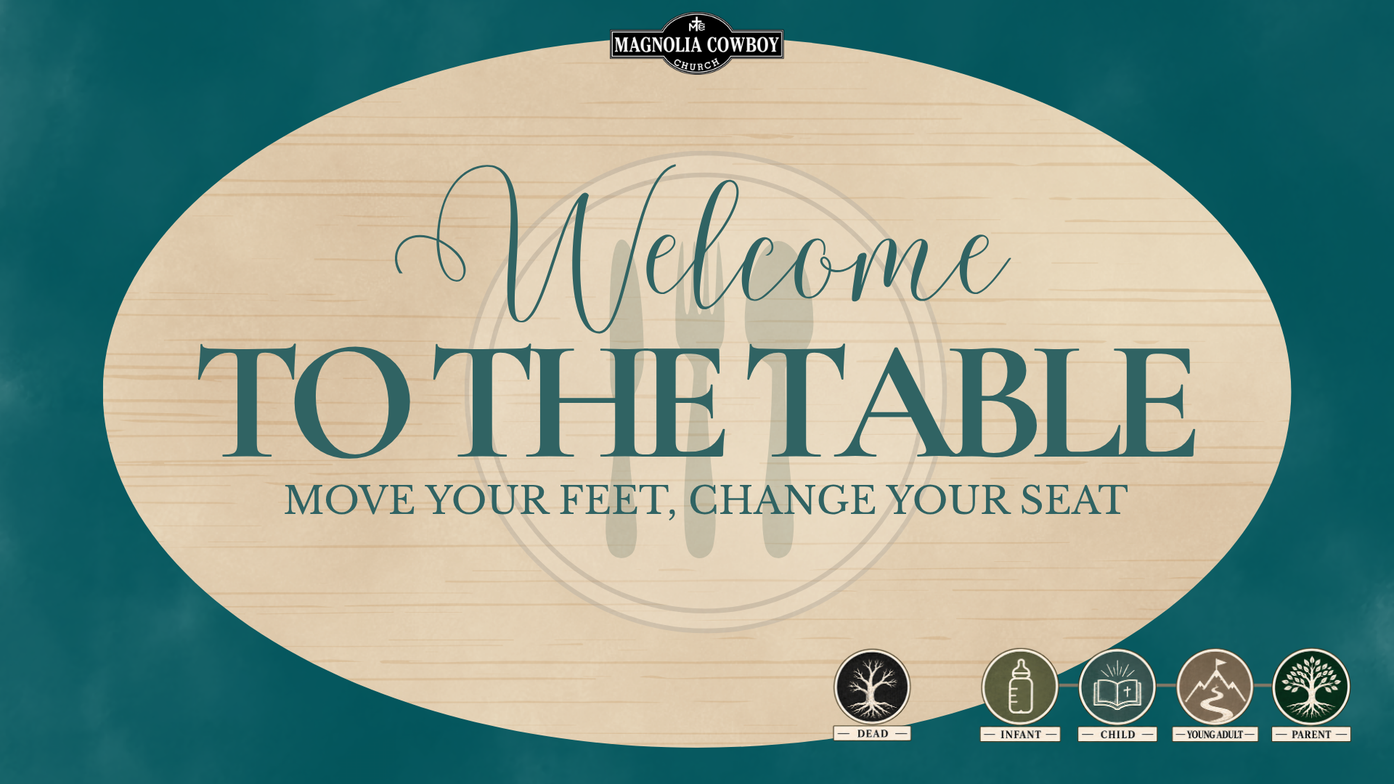
Just like physical development, spiritual growth moves through recognizable stages. These stages can be thought of as chairs: the infant, the child, the young adult, and the parent. Each stage has its own characteristics, motivations, and challenges.
The starting point for every believer is the same. As Jesus said, "I am the way, the truth, and the life. No one comes to the Father except through Me." - John 14:6
There is one way to begin this journey, and His name is Jesus. Nothing about that has changed.
What Does a Spiritual Infant Look Like?
A spiritual infant is completely dependent. They need constant nurturing, they are often confused or untaught, and their defining question is: Who is going to feed me?
Without a spiritual parent to guide them, an infant will remain stunted. They will not grow on their own. This stage is not a problem in itself. Every believer starts here. The problem is staying here far longer than necessary.
What Does a Spiritual Child Look Like?
The spiritual child has found their voice, but their motivation is self-centered. Their defining question is: What about me?
Their diet is pure sugar spiritually speaking. They want what feels good, what entertains them, and what benefits them. When they do not get what they want, the response is often whining, gossip, and conflict.
As Paul wrote, "When I was a child, I spoke and thought and reasoned as a child. But when I grew up, I put away childish things." - 1 Corinthians 13:11
It is completely normal for a five-year-old to act like a five-year-old. It is not normal for a forty-year-old to act like one. And yet, in the church, this happens more than most people want to admit.
Why Do So Many Christians Stay Stuck in These Early Stages?
The honest answer is comfort. The infant and child stages are easy. Nobody asks much of you. You receive more than you give. There is very little tension or challenge.
These stages feel safe. But safe is not the same as healthy. And comfortable is not the same as growing.
What Is the Spiritual Young Adult Stage?
The young adult stage is the most radical shift yet. This is where a believer moves from consumption to contribution. Their defining question is no longer "who will feed me" or "what about me." It becomes: Where is the battle? Put me in, coach.
This shift is described clearly in Scripture. "I am writing to you who are young in the faith because you have won your battle with the evil one... I have written to you who are young in the faith because you are strong. God's word lives in your hearts, and you have won your battle with the evil one." - 1 John 2:13-14
What Are the Three Marks of a Spiritually Mature Young Adult?
1. They Are Strong
They no longer need to be spoon-fed. They have developed independent spiritual strength through consistent prayer, time in God's Word, and relationships with more mature believers. They have been around spiritual moms and dads who have poured into them through life groups, Bible studies, and serving ministries.
2. The Word of God Lives in Them
Scripture is not just something they hear on Sunday. It governs their decisions, protects their minds, and anchors their hearts throughout the week. Real growth happens in the other six days, in the other 165 and a half hours of the week, when a believer is alone with God and His Word. When you stop reading the Word, the Word starts reading you. It gives you what you need, when you need it.
3. They Overcome the Enemy
Spiritual young adults understand that saying yes to Jesus means the enemy will come. They recognize his traps. They know that when the enemy speaks, he is lying. He cannot tell the truth. They are active in spiritual warfare and they fight to protect their faith, their families, and their church.
What Are the Two Major Traps That Pull Young Adults Back?
The Trap of Worldly Distraction
Busyness, entertainment, hobbies, sports, work, digital media, and relationship approval all compete for the attention of a spiritually growing believer. Studies show that 18 to 35 year olds average 6.5 to 8 hours of screen time per day. That same age group reports 80% experiencing high anxiety about their future. These are not neutral statistics. They reflect where attention and trust are being placed.
The Trap of Materialism and Ambition
Climbing the ladder of career, money, and possessions can quietly replace God as the center of life. It is fine to have nice things. But it is not fine for nice things to have you. You cannot make a good thing a God thing.
Jesus was direct about this: "No one can serve two masters. For you will hate one and love the other. You will be devoted to one and despise the other. You cannot serve God and be enslaved to money." - Matthew 6:24
The word translated as "money" here comes from the Aramaic word mammon, which means riches or that in which one trusts. The real question is not how much money you have. It is what you are trusting in.
What Does Spiritual Maturity Actually Require?
Maturity requires surrender. Not just attendance. Not just giving. Surrender.
"Solid food is for those who are mature, who through training have the skill to recognize the difference between right and wrong." - Hebrews 5:14
God loves you whether you give Him a penny or serve Him every day. Salvation is not earned. But growth is chosen. If you want wisdom for the challenges of life, if you want to navigate hard seasons with clarity and peace, you have to surrender to Him and listen to Him. There is no shortcut.
Life Application
This week, take an honest look at where you are sitting. Are you still in the infant or child stage, waiting to be fed and asking what you can get? Or are you moving toward contribution, asking where you can serve and what you can give?
The challenge is simple but not easy: identify one specific way you can move from consumption to contribution this week. That might mean signing up to serve somewhere, committing to daily time in Scripture, or having an honest conversation with a more mature believer who can speak into your life.
Ask yourself these questions:
- Am I spending more time consuming content about faith than actually living it out?
- What is the one thing in my life right now that I am trusting more than God?
- If someone watched how I spend my time, money, and energy this week, what would they say I am devoted to?
- Am I connected to a spiritual community where I am both being poured into and pouring into others?
Growth is not about perfection. It is about direction. Choose to move forward this week, one step at a time, from wherever you are sitting right now.