Carried Through the Holidays

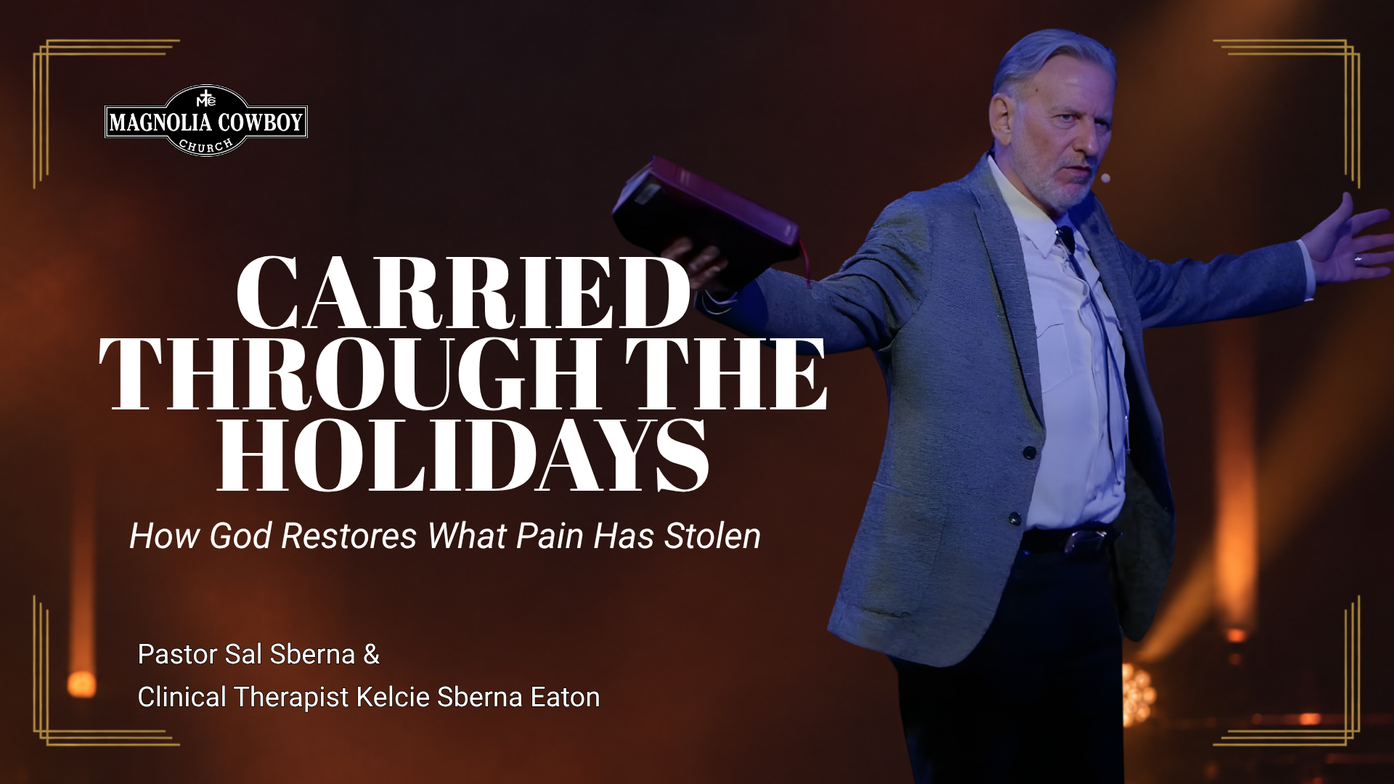
The holidays have a way of surfacing pain we thought we had buried. If you have ever felt the weight of old wounds pressing harder during what is supposed to be the most joyful time of year, you are not alone, and you are not broken. There is a reason your heart responds the way it does, and more importantly, there is a way through it.
Why Does the Holiday Season Make Emotional Pain Feel Worse?
There is nothing inherently traumatizing about Christmas music or pumpkin spice lattes. But the holidays carry with them a powerful expectation: that everything should feel warm, connected, and good. For those still carrying the weight of relational pain, that expectation collides hard with reality.
The holidays do not create the wound. They simply shine a light on one that was already there.
What Does Science Say About Why We Carry Relational Pain?
From the time we are in the womb, our brains are wired to seek safe connection. This is not just spiritual truth. It is neuroscience. We are biologically designed to attach to others, to need love, consistency, and safety.
This concept is known in clinical psychology as attachment theory. Simply put, our earliest and most important relationships teach our brains what to expect from people, how to relate to the world, and what to believe about ourselves.
- If those relationships were marked by consistency and unconditional love, we learn that we are worthy and that people can be trusted.
- If those relationships were marked by betrayal, abandonment, or abuse, we learn something very different. We may begin to believe we are unlovable, that we deserve to be left, or that pain is simply what we should expect.
The brain, trying to protect you, stores those painful experiences and uses them to keep you on guard. A small but powerful part of the brain called the amygdala takes past relational pain and triggers stress responses to prevent you from being hurt again.
What Are Common Stress Responses to Relational Trauma?
These responses can look different for everyone. Some of the most common include:
- Anxiety: Constantly replaying what happened, trying to control everything, or always waiting for the next bad thing to occur.
- Hypervigilance: Always watching your back, never fully trusting, always bracing for impact.
- Addiction: Using substances, shopping, pornography, or other behaviors to numb the pain and get a quick emotional fix.
The brain is not trying to hurt you. It is trying to protect you. But when the wound goes unhealed, those protective patterns can become a prison. What started as a shield slowly becomes an identity.
How Does Unhealed Pain Become a False Identity?
This is where the danger lives. Over time, the story shifts:
- From "I was rejected" to "I am a rejection."
- From "Someone betrayed me" to "I am not worthy of love."
- From "I was abused" to "This is what I deserve."
Healing is not the denial of trauma. Healing is not pretending the pain did not happen. Healing is the belief that although the brain has a tendency to respond a certain way, those who belong to God have the Holy Spirit. That is a supernatural resource that does not answer to the brain's wiring.
The people who hurt you had the power to change your circumstances for a time. But they never had the authority to cancel the identity God gave you or the purpose He wrote for your life before you were born.
What Does the Bible Say About Healing From Pain? The Story of Mephibosheth
In 2 Samuel chapter 9, there is a story that speaks directly to this kind of pain. A man named Mephibosheth, the grandson of King Saul and son of Jonathan, was dropped by his nurse as a child while she was fleeing the palace. The fall left him permanently crippled in both feet.
He had no Father. There is no mention of his mother in Scripture. The one person responsible for his care dropped him, and he spent his life in a place called Lo-Debar.
What Does Lo-Debar Mean in the Bible?
Lo-Debar literally means "nothing." It was a place of isolation, shame, and forgotten potential. Mephibosheth was hidden away there, far from the palace, far from his inheritance, living in the care of strangers who reminded him of how much he owed them.
Lo-Debar is not just a place on a map. It is the place many people live emotionally and spiritually. It is the corner of shame where you convince yourself that everyone else gets the blessing, but something is wrong with you.
Have You Ever Been Dropped by Someone Who Was Supposed to Carry You?
Maybe it was a parent who was not there when you needed them. Maybe it was a spouse who betrayed your trust. Maybe it was abuse, abandonment, or a church that let you down. Whatever it was, the wound was real, and it may have left you crippled in ways that are not visible on the outside.
Mephibosheth's very name means shame. And in Lo-Debar, he made a bed out of it.
How Does God Respond to Those Living in Lo-Debar?
Meanwhile, King David sat on his throne and asked a remarkable question. "Is there yet anyone left in the house of Saul that I may show him kindness for Jonathan's sake?" (2 Samuel 9:1)
David was not looking for someone who deserved it. He was looking for someone he could bless because of a covenant he had made. That is a picture of what God is doing right now. He is looking at His people and asking who He can show His covenant love to, who He can restore, who He can deliver.
And then David did something powerful. He sent someone to fetch Mephibosheth.
What Does It Mean to Be "Fetched" by God?
Fetch is an active word. It means something does not come to you on its own. Someone has to go and get it. Mephibosheth could not walk to the palace on his own. He needed to be brought.
That is exactly what God does. He knows you cannot get where you need to go on your own. He sends His Spirit to bring you out of your Lo-Debar.
Why Are We Afraid to Leave Lo-Debar?
When Mephibosheth arrived before David, he fell on his face and called himself a dead dog. He had been fetched out of Lo-Debar, but Lo-Debar was still inside of him.
Many people stay in their pain because they are afraid of what God will do when they come to Him. They expect punishment. They expect rejection. But look at what David said:
"Do not fear, for I will surely show you kindness for the sake of your Father Jonathan, and will restore to you all the land of Saul your grandfather; and you shall eat at my table regularly." - 2 Samuel 9:7
God is not angry with you. His response to your shame is not condemnation. It is kindness, restoration, and a seat at His table. The wrath for sin was poured out on Jesus. What remains for those who come to God is grace.
What Does God Want to Restore in Your Life?
David promised to restore everything to Mephibosheth. Everything. Whatever you feel has been stolen from you, whether it is your childhood, your innocence, your sense of worth, your future, God's promise is restoration.
"For I know the plans I have for you, declares the Lord, plans for welfare and not for evil, to give you a future and a hope." - Jeremiah 29:11
You do not have to stay defined by what happened to you. You do not have to keep making a bed in your shame.
What Happens When We Stay in Lo-Debar Too Long?
The story notes that Mephibosheth had a young son named Micah. That son grew up in Lo-Debar. He watched his Father live in shame, in bitterness, in the belief that things should have been different.
When we refuse to leave our Lo-Debar, we teach our children how to live there too. The victimization mentality gets passed down. The shame becomes generational.
But when we allow God to fetch us, we bring our children with us to the king's table.
Did Mephibosheth's Feet Ever Get Healed?
The last verse of 2 Samuel 9 says that Mephibosheth ate at David's table as one of the king's sons, and he was lame in both feet.
His feet were never physically healed. But it did not stop him from receiving every blessing the king had for him. You may never be able to forget what happened to you. Some wounds leave marks. But the mark does not disqualify you from the table. God's grace is sufficient, and His invitation stands regardless of what you are still carrying.
"My grace is sufficient for you, for my power is made perfect in weakness." - 2 Corinthians 12:9
Life Application
This week, identify your Lo-Debar. Name the thing, the person, the memory, or the belief that has kept you living in shame or pain. Write it down. Then make a deliberate decision to stop letting it define you.
You do not have to have it all figured out. You do not have to feel ready. Mephibosheth did not walk to the palace on his own. He was carried. Ask God to fetch you. Ask Him to bring you out of the place of nothing and into the place of restoration.
Ask yourself these questions as you reflect this week:
- What is my Lo-Debar? What pain, shame, or false identity have I been living in?
- Am I allowing what happened to me to define who I am, rather than letting God's Word define me?
- What would it look like this week to take one step away from Lo-Debar and toward healing?
- Who in my life might I be leading into Lo-Debar by modeling a victim mentality rather than a restored one?
God is not done with your story. He is looking for you right now, asking who He can show His kindness to. You were made for more than a bed of shame. It is time to leave Lo-Debar.